
The fuel cycle determines whether fusion energy is economically viable.
Marathon is funded by two US Department of Energy awards to deliver on the next-generation of fuel cycle technology, designed from the ground up for the demands of commercial fusion.
Our technology decreases tritium inventories and flow rates by a factor of 10x, improving plant economics, reliability, and safety.
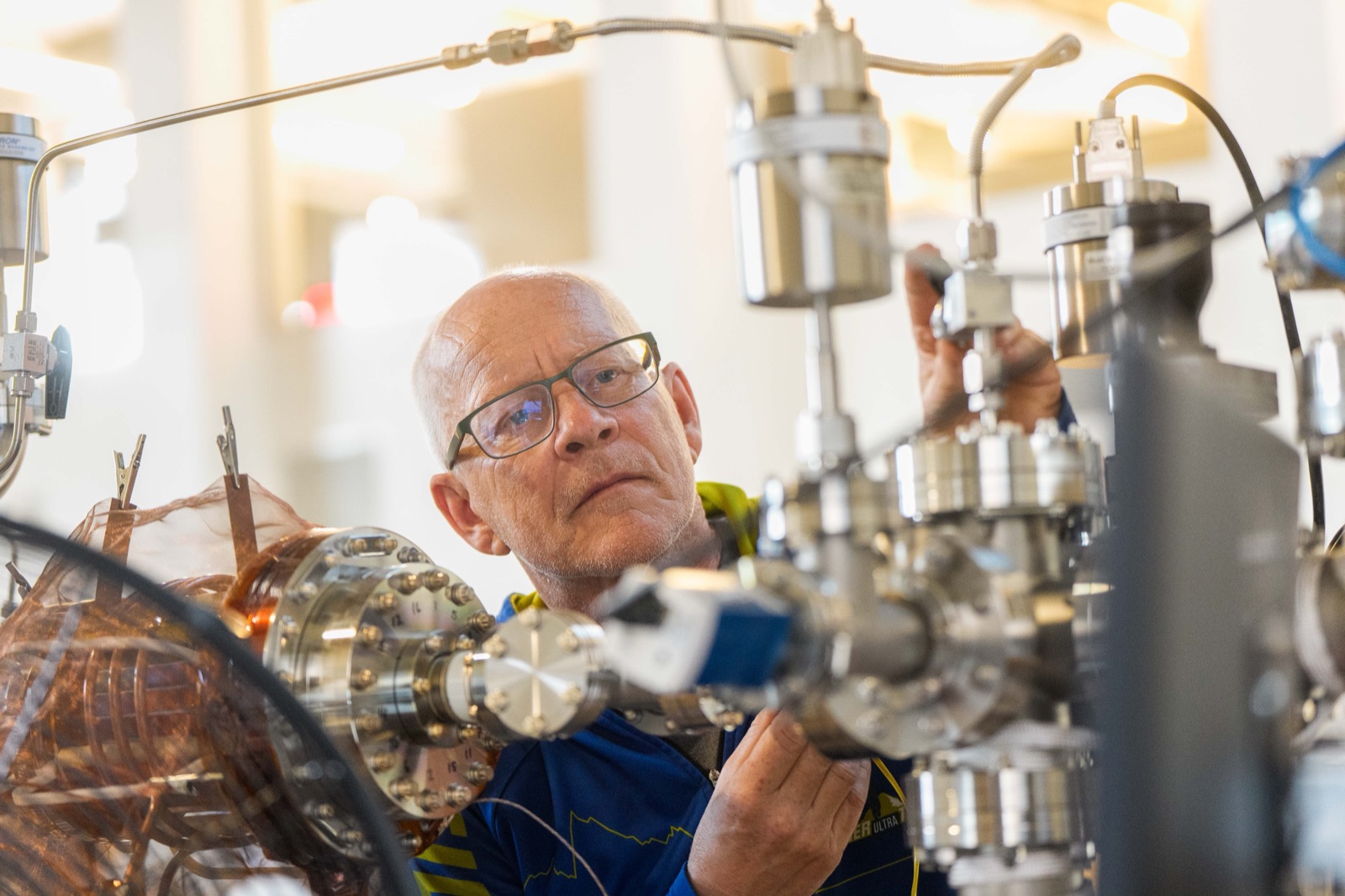
Lithium is enriched at our facility and loaded into the blanket where it gets irradiated by fusion neutrons and turned into tritium, the fuel of fusion power plants.
Tritium is extracted from the blanket and sent to injection systems to sustain plant operations.
Meanwhile, tritium that exhausts from the reactor is separated out from impurities and channeled into the injection system alongside the newly bred tritium.
Together, these breeding and recycling systems make the fuel cycle, closing a key gap between fusion experiments and commercial power plants.
Supported by the US Department of Energy
$3.6m to build critical infrastructure for fusion energy

Program objectives
Commission system, achieve first plasmaDone
Demonstrate isotopic enrichmentDone
Achieve record operating conditionsDone
Showcase long lifetime operationIn progress
Deploy commercial pilot2028