Growing fusion’s fuel supply while co-producing gold
Fusion power plants require tritium to start operations, but also generate tritium as a byproduct of plant operations. This unique property, using the reactor's own byproduct as fuel, is the key to fusion's promise of abundant energy.
To fuel other fusion power plants and scale deployment, plants will need to generate excess tritium using neutron multipliers: materials that generate extra neutrons instead of absorbing them.
Marathon's research has shown that mercury-198 can be used as a neutron multiplier to close the fuel cycle while generating thousands of kilograms of stable gold per gigawatt of fusion power per year from the neutron-driven reaction.
A natural dividend to scale the next era of energy production
Gold production can approximately double the revenue generated by fusion power plants by adding a valuable co-product.
This is achieved without compromise to a plant's energy output, or tritium self-sufficiency.




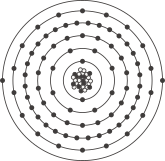
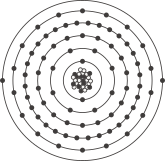

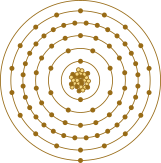



Click or tap the diagram to advance. Drag to explore the full reaction.